

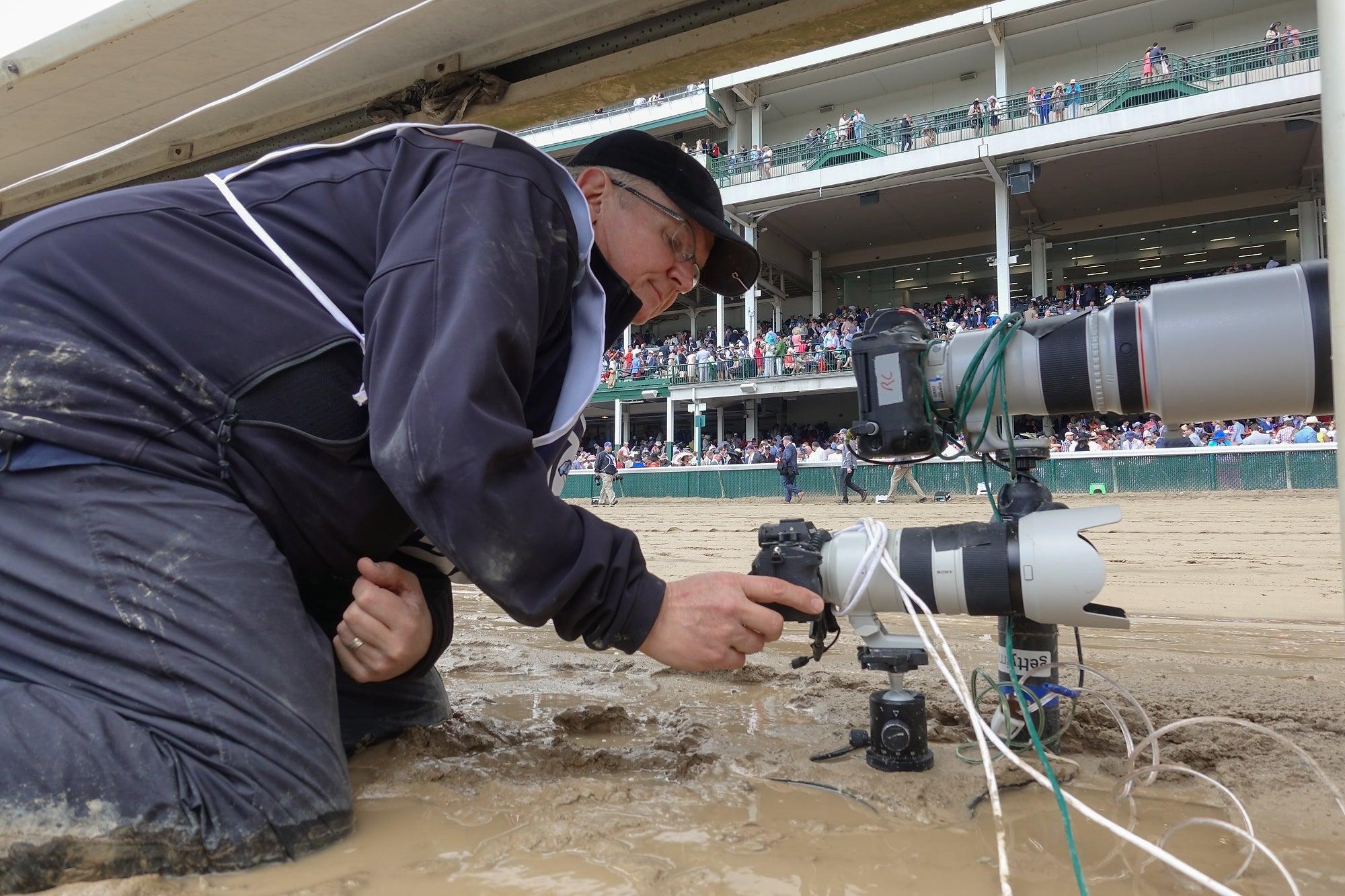
A photographer stands in position and waits.
The horses are still some distance away.
Nothing dramatic is happening yet.
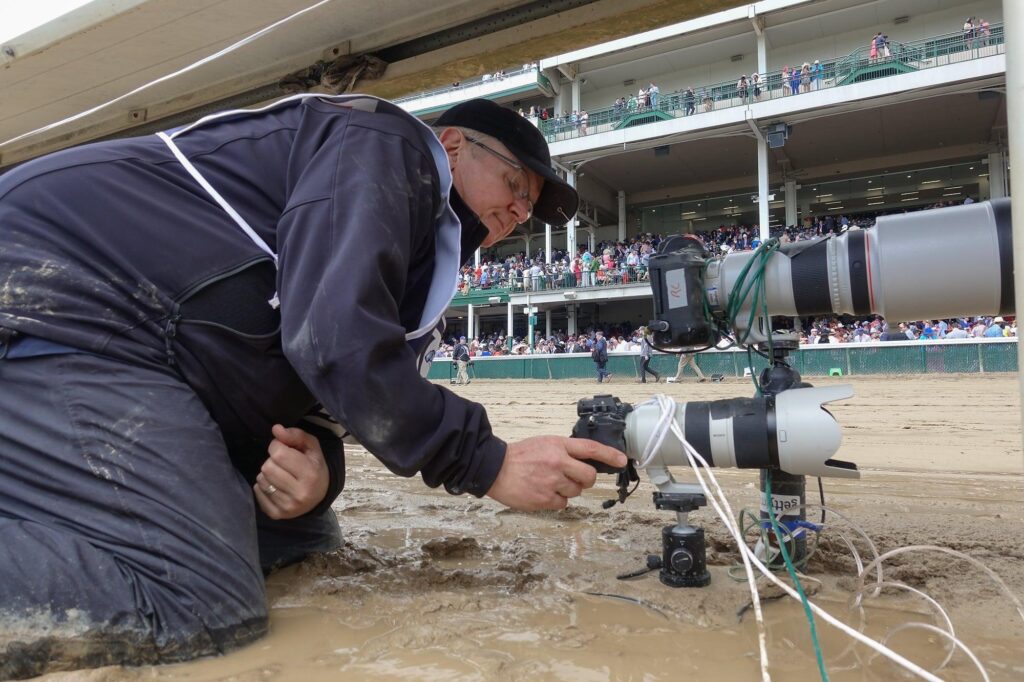
Then the field approaches.
The photographer raises the camera.
For less than a second, everything comes together: the leaders are level, the jockeys are pushing for the finish and the crowd behind them reacts as one.
The shutter fires.
Then the moment is gone.
Horse racing provides photographers with some of the most demanding and rewarding moments in sports photography because the action is fast, unpredictable and visually rich.
A race can disappear in an instant
Written journalism has time to describe what happened.
Photography has to capture it.
The crucial moment may last less than a second.
The photographer therefore has to anticipate rather than simply react.
Where will the important moment happen?
Which horse will be central?
What direction will the action take?
What will the background look like?
These decisions are made before the decisive instant arrives.
The finish line is only one story
The obvious racing photograph is the finish.
But experienced photographers know that the sport provides stories everywhere.
There are images of horses in the mounting yard, jockeys preparing for a ride, trainers watching from the rail, owners reacting, stable staff working and crowds responding.
These moments can sometimes tell a more complete story than the finish-line photograph alone.
One image shows competition.
Another shows preparation.
Another shows emotion.
Together they create the visual narrative of the day.
The importance of anticipation
Good sports photographers develop an understanding of the sport itself.
A photographer who knows racing can anticipate where meaningful action is likely to happen.
They can recognize the visual importance of a major race, understand how horses move into position and predict where the decisive finish might occur.
Technical camera knowledge is important.
Subject knowledge is equally important.
The best image often comes from understanding what is about to happen before it happens.
The image the newspaper chooses
A photographer can return from a race meeting with hundreds or thousands of images.
Only a small percentage will be published prominently.
Editors make choices.
Which image best tells the story?
Which one captures the emotion?
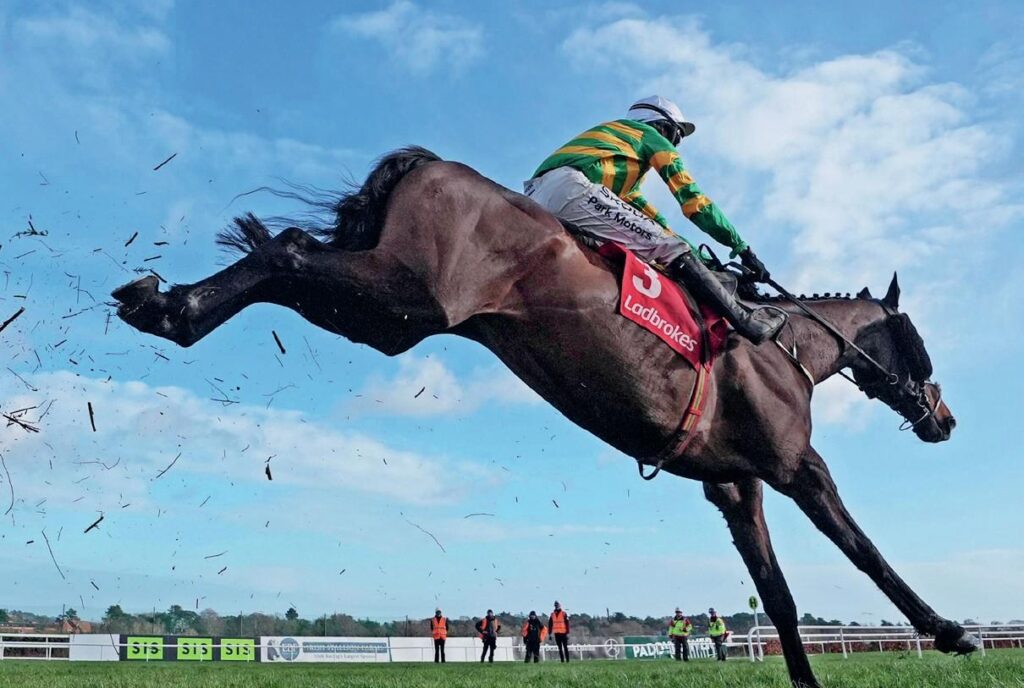
Which one is clearest?
Which image gives readers an immediate understanding of the event?
This shows how photography and editorial decision-making are connected.
A race may produce an extraordinary finish, but the final image selected by the newspaper can influence how readers remember it.
The photograph as a historical document
At first, a race photograph is news.
Years later, it can become history.
Look through an old collection of racing photographs and you can see far more than horses.
You see changing fashions.
You see different racecourse designs.
You see old equipment.
You see crowds behaving differently.
You see personalities who may no longer be active in the sport.
The photograph records all of these things unintentionally.
That makes racing photography an important historical resource.
Behind-the-scenes images can be even more revealing
There is particular value in photographing moments that spectators normally overlook.
A groom adjusting equipment.
A trainer watching a horse quietly before a race.
A jockey sitting alone before competition.
Stable staff preparing horses early in the morning.
These scenes can change the audience’s understanding of racing.
They remind readers that the spectacle depends on work.
The glamorous image and the ordinary image belong to the same story.
Digital media has changed the photographer’s role
In the print era, photographs were produced for a limited number of physical pages.
Today, digital publications can create galleries, video packages and social-media posts around a single meeting.
That means a photographer may have to think in multiple formats.
A dramatic horizontal image may be ideal for a website.
A portrait may work better for social media.
A behind-the-scenes sequence might support a longer feature.
The camera is now part of a wider publishing system.
Fans have become photographers too
Smartphones have changed sports fandom.
Fans can capture their own images from the racecourse and share them immediately.

This has created an enormous amount of audience-generated racing content.
But professional photography still has a distinctive role.
Professional photographers have access, equipment, experience and the ability to anticipate key moments at a level that casual spectators generally cannot.
The two forms of imagery can coexist.
The photograph can tell the story without words
This is perhaps the greatest strength of racing photography.
A single frame can show tension, speed, disappointment, excitement and celebration simultaneously.
A reader may understand the emotional character of a race before reading the first sentence.
That is why the photographer’s work deserves to be considered journalism rather than decoration.
One second can become permanent
The race continues.
The horses move on.
The crowd eventually goes home.
The moment itself disappears.
But the photograph remains.
A fraction of a second becomes part of the historical record.
That is one of the most remarkable connections between anecdote, photography and horse racing: sometimes the smallest moment becomes the image everyone remembers.