


A long queue is forming before the next race.
Nobody in it knows everyone else.
There are people of different ages, backgrounds and levels of experience.
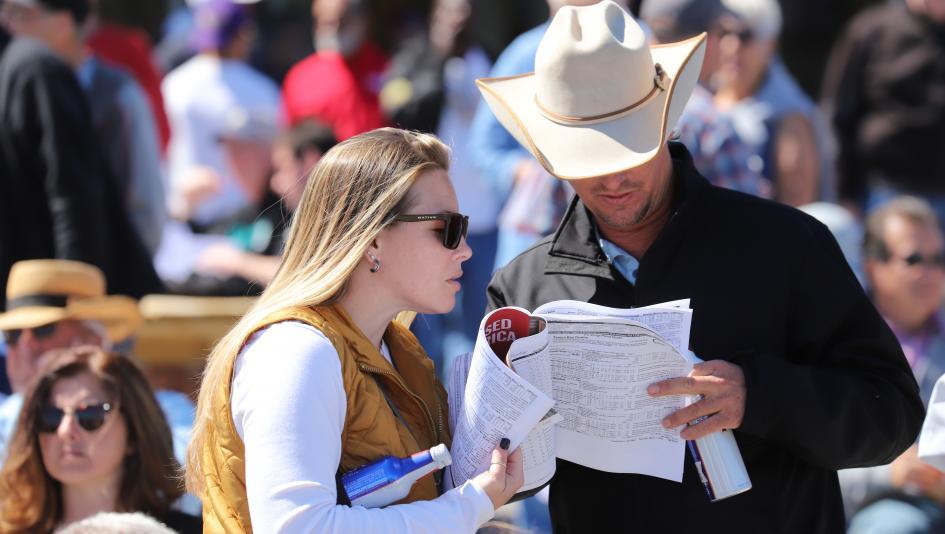
One person is holding a race program.

Another is looking at the horses approaching in the distance.
A third is telling a friend about a race from years ago.
Then somebody mentions a horse’s name.
An older man in the queue looks up.
“I remember that one,” he says.
Another person laughs.
Suddenly, strangers who had nothing to discuss thirty seconds earlier are talking as though they have known one another for years.
That tiny moment captures one of the most overlooked qualities of horse racing.
The sport is exceptionally good at creating conversations between people who would otherwise have no reason to speak.
The queue is a temporary community
A queue normally exists for a practical reason.
People wait because they need something.
At a racecourse, however, waiting can become part of the social experience.
People discuss what they have seen.
They compare memories.
They ask questions.
They point toward the track.
They listen to other people’s stories.
For a few minutes, the queue becomes a miniature sporting community.
The race has already created a shared subject.
That is enough to start a conversation.
Strangers often connect through memories
Sports conversations frequently begin with a question that sounds simple.
“Did you see that?”
Or:
“Do you remember that race?”
Those questions invite stories.
A person might remember a close finish from years earlier.
Another might remember attending a particular racecourse as a child.
Someone else might tell a story about a jockey they used to watch.
The fascinating part is that these stories do not need to be identical.
Shared interest is enough.
Anecdotes create an informal history of racing
Official racing history is recorded in results, archives and publications.
Informal racing history is carried in conversations.
One fan tells another about a famous race.
That person retells it to someone else.
The details may gradually become simplified or embellished, but the central memory survives.
This oral tradition is part of what gives sport its cultural character.
The race may be recorded officially.
Its meaning is remembered socially.
Why newcomers often learn through people
Someone unfamiliar with horse racing may find a race program complicated.
Names, terminology and statistics can seem overwhelming.
A conversation with an experienced fan can make the sport easier to understand.
Instead of reading an abstract explanation, the newcomer hears a story.
“Watch that horse in the early part of the race.”
“Remember what happened when these two met last time.”
“That jockey is known for doing this at this track.”
These comments make the sport feel alive.
The experienced fan becomes an unofficial guide
Sports communities depend on people who have accumulated knowledge.
They remember old competitions.
They recognize personalities.
They know the traditions.
They can explain things that are not obvious to newcomers.
In horse racing, these people are everywhere.
They may be long-time spectators, local journalists, trainers or simply fans who have followed the sport for many years.
Their stories can be more approachable than formal explanations.
Why the social experience matters
It is easy to think of fandom as something happening inside an individual’s mind.
In reality, fandom is often social.
People discuss the sport.
They celebrate together.
They argue about performances.
They remember old events.
They tell the same stories repeatedly.
This process gives sport a communal identity.
Horse racing benefits enormously from that culture.
The queue can contain several generations
One of the most interesting aspects of a racecourse conversation is the mixture of ages.
An older fan may remember races that younger spectators know only through archives.
A younger fan may know more about digital racing media or current competitors.
Each generation brings different knowledge.
When they begin talking, those knowledge systems overlap.
Historical memory meets modern fandom.
That is one of the ways sporting traditions survive.
Newspapers once performed the same social function
Before smartphones and instant digital updates, racing newspapers provided common material for conversation.
People might read the same preview in the morning and discuss it at the track later.
A result from one day could become the subject of workplace conversation the next morning.
The newspaper helped create a shared information environment.
Digital media has changed the delivery system, but the social function remains.
A racing article can still become something fans send to one another and discuss collectively.
The conversation does not have to be about winning
This is where racing fandom becomes broader than competition.
People may discuss a racecourse.
They may talk about an old photograph.
They may share a story about a trainer.
They may remember an unusual weather event.
They may talk about a famous commentator or journalist.
The sport provides countless conversation starters.
The winner is only one of them.
A queue can reveal the culture of a sport
The anecdote of strangers talking beside a betting window may seem insignificant.
It is not.
It reveals that racing has a social infrastructure.
The racecourse creates physical proximity.

The sport creates common knowledge.
Memory creates stories.
Stories create conversation.
Conversation creates community.
This is a powerful cycle.
Digital communities have simply made the queue bigger
The modern equivalent of that racecourse queue can exist online.
Instead of five strangers standing together, there may be thousands of fans discussing a race through websites, social platforms and forums.
The geography has changed.
The mechanism has not.
Someone mentions a horse.
Someone else remembers an earlier performance.
Another person shares a photograph.
A fourth person contributes a historical anecdote.
The sporting community grows through accumulated conversation.
The most valuable thing may not be the information
A racecourse can provide official results.
A website can provide statistics.
A newspaper can provide a detailed report.
But none of these completely reproduces what happens when people tell each other stories.
Conversation adds personality.
It adds emotion.
It adds memory.
It creates relationships between people who might otherwise remain strangers.
Why the queue matters
The queue eventually moves.
The race begins.
The people who were talking may never meet again.
Yet for several minutes, they belonged to the same temporary community.
That is one of the quiet strengths of horse racing.
It does not only create competition between horses.
It creates countless opportunities for people to connect with one another.
Sometimes the most revealing racing anecdote is not about a horse, jockey or trainer at all.
Sometimes it is about two strangers waiting in line, discovering that they both remember the same race.